
Behind the Walls of The Shawshank Redemption
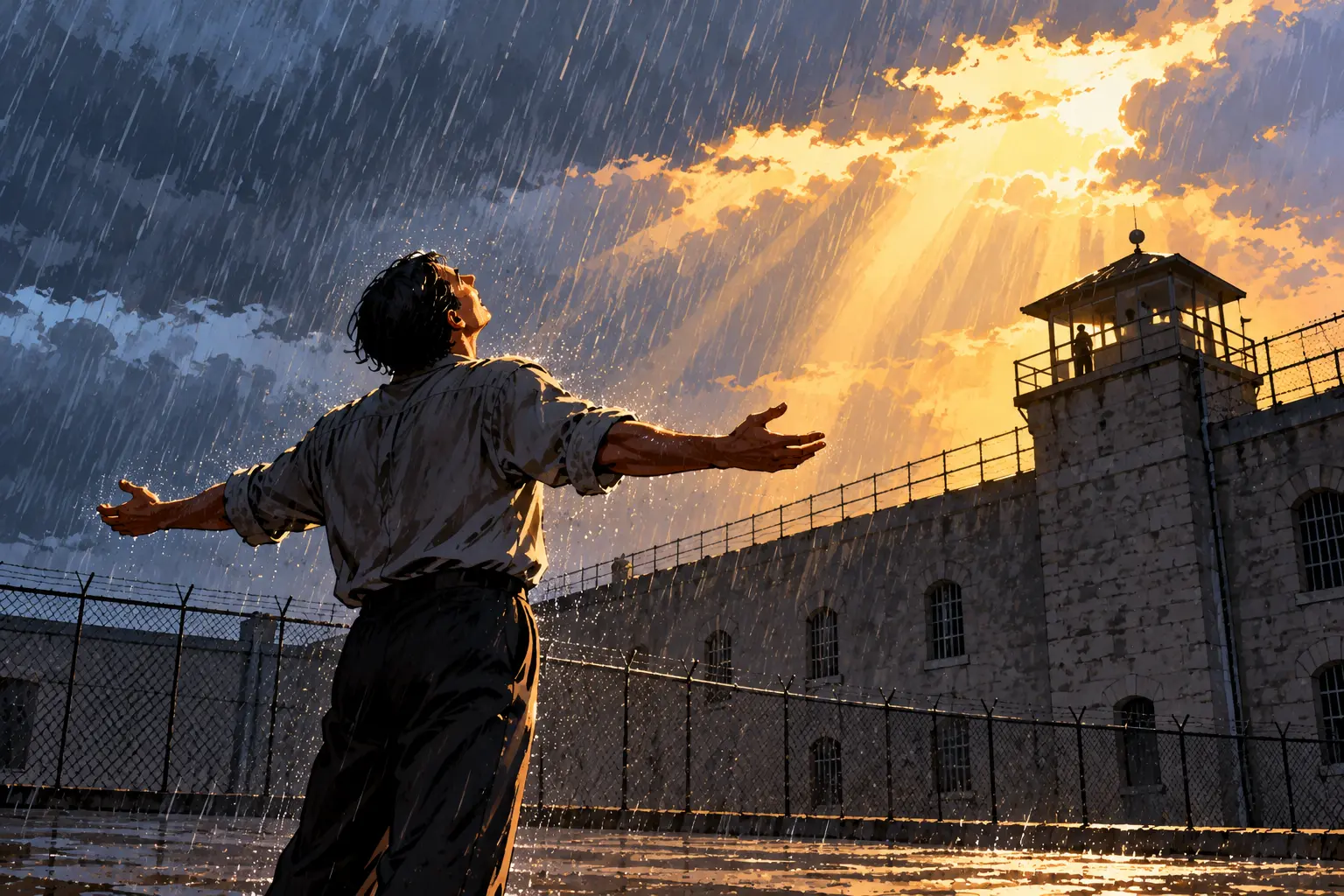
Step behind the gates of The Shawshank Redemption, where Andy Dufresne and his fellow prisoner Red find a friendship worth holding on to. The prison looks solid enough to swallow them both. Making it that convincing took more than finding an old building.
The story's Maine prison was filmed in Ohio, and its main cellblock stood inside a warehouse. Even Shawshank needed a double.
Spoilers ahead, including the ending.
The 1994 Film at a Glance: Written and directed by Frank Darabont. Main filming: summer 1993. New York and Los Angeles opening: September 23, 1994; US wide release: October 14, 1994. Runtime: 142 minutes.
How Stephen King's Story Became a Movie
Before Andy Dufresne arrived at the movies, his story appeared in author Stephen King's 1982 book Different Seasons. The story's full title was Rita Hayworth and Shawshank Redemption.
Director Frank Darabont had already turned another Stephen King story, The Woman in the Room, into a short film. King let him use that story for just $1 through a program called Dollar Baby. Shawshank came later.
Shawshank would be the first film Darabont directed for movie theaters.
Andy and Red's friendship was at the heart of the film. Now Darabont needed a prison that made their story feel real.
How an Ohio Prison Got the Part
The real building is the Ohio State Reformatory at 100 Reformatory Road, Mansfield, Ohio. It opened in 1896 and closed in 1990, leaving a huge limestone prison waiting for a very different kind of work.
Architect Levi Scofield designed the prison to look stern while giving prisoners a chance to turn their lives around. That included school lessons and job training. Decades later, it became a maximum-security prison, and worsening conditions helped lead to its closure.
Darabont wanted a prison that was no longer in use. Eve Lapolla of the Ohio Film Commission showed him photographs of Mansfield's reformatory and arranged a visit.
Terence Marsh, the production designer who planned the movie's sets, could picture the sweeping view of the prison from above. Nearby warehouse space offered room to build sets. Together, the building's appearance and that practical extra space made Mansfield work.
With the heat shut off after closure, dampness had helped the building decay. A crew of 41 prisoners was brought in to scrape away old paint so contractors could repaint the rooms.
You can see the filmmakers exploring the building in this planning visit from 1993.
Real Rooms, Built Cells
The prison supplied the outside views and some real rooms, but its cramped cells and hallways made filming difficult. Marsh's solution was a four-story set of prison cells in a warehouse about a mile away, complete with working lights and doors operated by air pressure.
That warehouse was a former Westinghouse building. On screen, its sets and the real prison walls look like parts of the same building.
Some familiar rooms can still be seen at the reformatory. Its Shawshank Museum, included on the self-guided route, has Warden Norton's office, Brooks's room and movie props.
Beyond the Prison Gates
Ohio also supplied Andy's courtroom, his banking stop and the hotel exterior. Several stops need advance arrangements, so check access before setting off.
| Location | Address | Its Movie Role and Visitor Note |
|---|---|---|
| Pugh Cabin, Malabar Farm State Park | 4050 Bromfield Rd., Lucas, Ohio | House seen while Andy waits outside in his car. Check at the visitor center before driving over. |
| Bissman Building | 193 N. Main St., Mansfield, Ohio | Brewer Hotel exterior. Drive-by viewing only. |
| Wyandot County Courthouse | 109 S. Sandusky Ave., Upper Sandusky, Ohio | Andy's courtroom. Ask permission for access and photographs. |
| Shawshank Woodshop | 226 S. Eighth St., Upper Sandusky, Ohio | Prison workshop scenes. Visits require an appointment. |
| Former Bank in Ashland | 19 W. Main St., Ashland, Ohio | Andy withdraws money using the name Randall Stevens. Call ahead for access. |
Brooks's hotel room was filmed at the prison; the Bissman Building supplied its outside appearance.
The oak tree linked to Red's journey is gone after storm damage, and its field is private farmland. You can follow the movie's trail, but you can't walk into that field.
The Beach Is Farther South
The final reunion carries Andy and Red to Zihuatanejo, Guerrero, Mexico, in the story. For filming, the production went to Sandy Point on St. Croix in the U.S. Virgin Islands.
The beach is part of a national wildlife refuge. Access is seasonal to protect nesting leatherback sea turtles, so check the refuge's current visiting rules before planning a trip.
That reunion almost stayed off screen. The beach meeting wasn't in the original script; Castle Rock executives suggested adding it. The finished film lets us see the friends together again.
The People Inside Shawshank
Tim Robbins plays Andy Dufresne, while Morgan Freeman plays Ellis Boyd “Red” Redding. Their friendship gives the movie its center, while the other actors make life around them feel crowded, tense and often dangerous.
Stephen King had written Red as a white Irishman, but producer Liz Glotzer suggested Freeman for the role.
Brooks Hatlen, the older prisoner played by James Whitmore, also got a bigger role in the movie. Brooks had a small part in Stephen King's story, but Darabont expanded it to show what years inside could do to a person.
For Brooks, freedom is frightening. Prison has become the world he understands, and following him outside lets us feel how hard it is to leave that world behind.
Shawshank Cast Ages, Then and Now
For the filming ages below, we used June 16, 1993, when filming was scheduled to begin. Each actor's first day could differ. The last column shows their age on October 31, 2026, or their death date and age if they have died.
| Performer | Role | Birth Date | Age at Scheduled Start | Age or Status on Oct. 31, 2026 |
|---|---|---|---|---|
| Tim Robbins | Andy Dufresne | Oct. 16, 1958 | 34 | 68 |
| Morgan Freeman | Ellis Boyd “Red” Redding | June 1, 1937 | 56 | 89 |
| Bob Gunton | Warden Samuel Norton | Nov. 15, 1945 | 47 | 80 |
| William Sadler | Heywood | April 13, 1950 | 43 | 76 |
| Clancy Brown | Captain Byron Hadley | Jan. 5, 1959 | 34 | 67 |
| Gil Bellows | Tommy | June 28, 1967 | 25 | 59 |
| Mark Rolston | Bogs Diamond | Dec. 7, 1956 | 36 | 69 |
| James Whitmore | Brooks Hatlen | Oct. 1, 1921 | 71 | Died Feb. 6, 2009, aged 87 |
Gil Bellows was 25 on that date and turned 26 on June 28, during that summer's filming.
What the Camera Didn't Show
Filming took about three months, with Ohio weather adding to the work. Robbins and Freeman remembered heat, hail and tornadoes.
Robbins remembered Andy's escape into a creek in Ohio cow country as especially unpleasant. Andy was finally reaching freedom. Robbins still had to get through the scene.
Freeman remembered the actors working with real hot tar for the rooftop scene, repeating the job as it hardened. Their break was earned off camera, too.
Andy's escape tunnel needed a different trick. The crew used about ten feet of tunnel with painted rings on a card at the far end. In the beam of a flashlight, that short passage seemed much longer.
Roger Deakins, who led the camera and lighting work, helped make freedom visible. The cramped, gray prison gives way to open space and bright color at the end.
Music That Reaches Beyond the Walls
One moment of escape happens while Andy is still inside. He plays a recording over the prison loudspeakers, letting music briefly fill a place governed by orders and routine.
The piece is “Sull'aria,” a duet from Mozart's opera The Marriage of Figaro. Composer Thomas Newman wrote the film's new background music; Andy's record plays Mozart.
Darabont added the opera scene; it wasn't in Stephen King's original story. He had listened to the music repeatedly and felt lifted by it. Then he imagined Andy wanting to share that feeling with the other men.
Newman used an orchestra to help tell Andy and Red's story. His music earned an Oscar nomination.
Listen to the closing track, “End Title,” and see which scenes come back to you.
The Audience That Came Later
For all the care put into it, Shawshank had a difficult first year at the box office. Its reported production budget was $25 million, while North American ticket sales during 1994 came to about $16.5 million.
Yet movie critic Roger Ebert admired its story of friendship and holding on to self-respect when it opened, even while finding parts of the middle slow.
It received seven Oscar nominations, including Best Picture, Best Actor for Morgan Freeman and Best Original Score for Thomas Newman's music. It won none.
Then viewers found it at home. Strong VHS rentals and television showings, including TNT's run beginning in 1997, helped the film reach a wider audience. Andy and Red had more time to make their mark.
Think you remember life inside those walls? Try our Shawshank Redemption quiz.