The Matrix Unplugged: How the Movie Came to Life
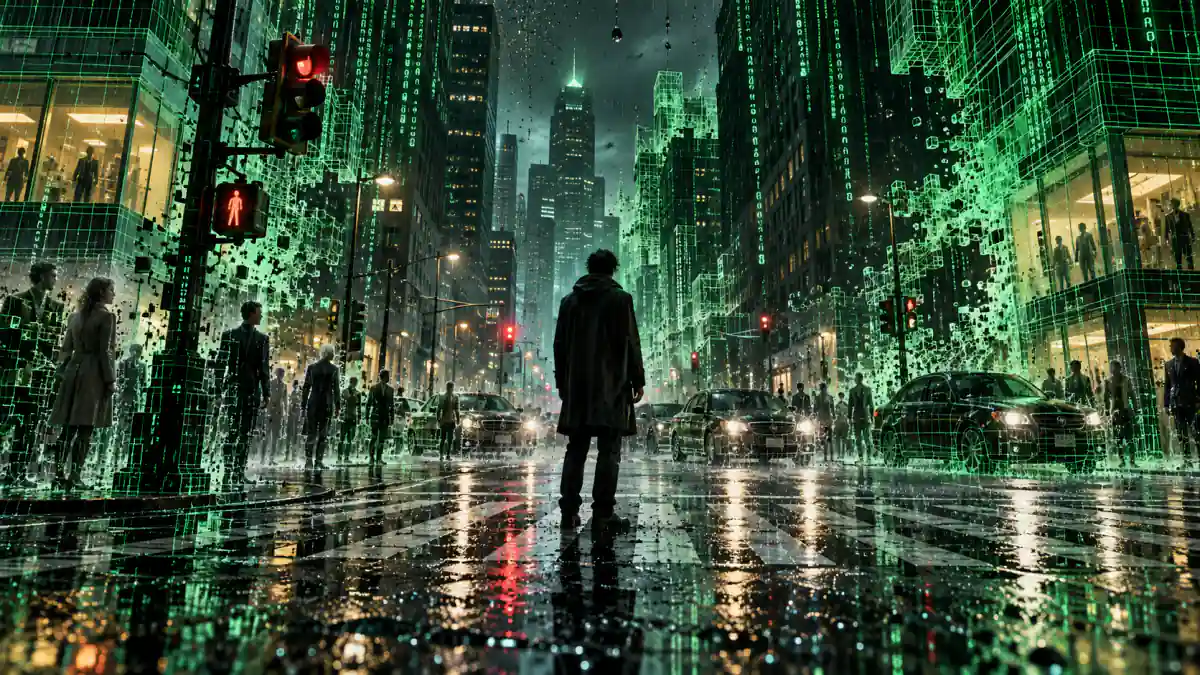
For Neo, the computer hacker played by Keanu Reeves, the trouble begins when the world he knows stops making sense. In The Matrix, that familiar world is a simulation: a world created by computers. Discovering the truth sends him into fights where people hang in the air and time seems to slow to a crawl.
Getting those moments onto the screen took real work. Actors spent months learning to fight, Sydney buildings became part of an unnamed city, and photographs became a moving view of almost frozen action. Here’s how the people behind the 1999 film put that strange world together.
Spoilers ahead for the original film.
The 1999 Film at a Glance: Written and directed by Lana and Lilly Wachowski. Main filming began in March 1998. US release: March 31, 1999.
Drawing a World That Couldn’t Exist
The Wachowskis had written The Matrix before making their earlier crime thriller, Bound. Their new story mixed questions about reality with action inspired by Hong Kong movies and Japanese animation. Bringing that mixture to life meant working out what it would actually look like.
Storyboards helped make the leap. These drawings of planned shots let the filmmakers work through their visual ideas before cameras rolled.
Artist Geof Darrow designed machines, pods and towers for the film’s strange future. Steve Skroce drew the detailed, shot-by-shot storyboards.
Reeves had some reading to do as well. His preparation included Jean Baudrillard’s Simulacra and Simulation, a book about how images and symbols shape what we accept as real.
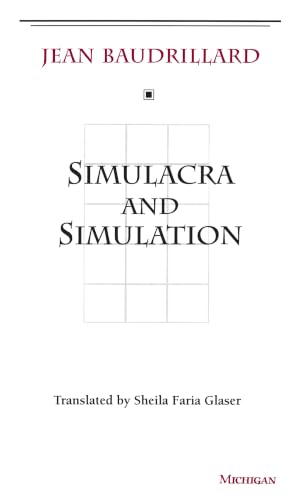
- Go deeper into The Matrix with the book its filmmakers asked Keanu Reeves to read.
- Explore how images and symbols shape what we accept as real.
- Bring thought-provoking ideas to your next film-club discussion.
Sydney Becomes the Matrix
The drawings gave the crew a plan, but they still needed streets and buildings for Neo’s world. Sydney, New South Wales, Australia, offered a useful mix: skilled crews, suitable architecture and costs that appealed to the producers.
The city in the story has no name. On screen, it joins real Sydney locations to rooms built for the movie.
The Sydney locations include the Martin Place fountain and the Colonial State Bank Centre. A scene-by-scene location guide connects those and other city sites to the action:
| Filming Location | Address | Where It Appears |
|---|---|---|
| Lloyd Rees Fountain | Martin Place at Pitt Street, Sydney, New South Wales, Australia | The training scene where the woman in red distracts Neo |
| Colonial State Bank Centre | 52 Martin Place, Sydney, New South Wales, Australia | The government building where Morpheus, Neo’s guide, is held |
| Old General Post Office | 1 Martin Place, Sydney, New South Wales, Australia | The ambush building associated with the déjà vu cat |
| Former Forty One Restaurant | Level 41, Chifley Tower, 2 Chifley Square, Sydney, New South Wales, Australia | Cypher’s secret steak meeting with the enemy, Agent Smith |
| Trinity’s Phone-Box Escape Site | Hickson Road at Towns Place, Millers Point, Sydney, New South Wales, Australia | Neo’s ally Trinity makes an early escape by telephone |
The old General Post Office now houses The Fullerton Hotel Sydney.
Building Room for the Action
Other scenes took shape at Fox Studios in Moore Park, Sydney, New South Wales, Australia, and in converted warehouses. The crew built the lobby and government-office spaces used in the rescue action. A huge city-image backdrop beyond the windows helped place those rooms high above Sydney.
The helicopter sequence used a full-size aircraft mounted on a studio rig. Computer effects could add its spinning blades, while the lighting crew created their moving shadows. Even an apparently airborne rescue needed careful work on the studio floor.
Learning to Move Like Neo and Trinity
The sets were one part of the illusion. The actors had to supply the movement.
Yuen Woo-ping, the fight choreographer who planned the combat, and his team trained the main performers for about four months before filming. Kung fu practice was part of the job, along with learning to move while attached to supporting wires.
The wires helped performers leap farther or hang in the air. Landing was another matter: the actors had to stay balanced and make the movement look natural.
Reeves was also recovering from neck surgery and trained in a neck brace.
The Matrix Cast, Then and Now
The filming ages below use March 1998, when the main shoot began. Each actor’s actual first day could differ. The last column gives their age or status on October 31, 2026, including a death date and age for Gloria Foster.
| Performer | Role | Birth Date | Age in March 1998 | Age or Status on October 31, 2026 |
|---|---|---|---|---|
| Keanu Reeves | Neo / Thomas Anderson | September 2, 1964 | 33 | 62 |
| Laurence Fishburne | Morpheus | July 30, 1961 | 36 | 65 |
| Carrie-Anne Moss | Trinity | August 21, 1967 | 30 | 59 |
| Hugo Weaving | Agent Smith | April 4, 1960 | 37 | 66 |
| Joe Pantoliano | Cypher | September 12, 1951 | 46 | 75 |
| Gloria Foster | The Oracle | November 15, 1933 | 64 | Died September 29, 2001, aged 67 |
| Marcus Chong | Tank | July 8, 1967 | 30 | 59 |
Reeves’s reported fee for the first film was $10 million (about $20.2 million in 2026 dollars). That estimate uses the film’s release year, 1999, and US inflation through September 2026.
Making Time Stand Almost Still
The training helped the performers sell the fights. Bullet time let the filmmakers show those fights in a different way: the action seems to slow almost to a stop while our viewpoint keeps moving around it.
John Gaeta, the visual-effects supervisor, and his team used groups of up to 120 still cameras. Each camera looked at the performer from a slightly different angle. Firing them in sequence produced a set of photographs that could carry the viewer around the action.
Imagine standing in a line of photographers, then looking through their pictures in order. Your view moves from one person’s position to the next. For the film, computers added extra images between the photographs to smooth out that movement.
The illusion brings together the actors, stunt crew, and camera and effects teams.
This short behind-the-scenes clip takes you onto the rooftop shoot for the original film.
Green Code, Cold Light and Dark Glasses
The film’s two worlds also have different looks. Bill Pope, who led the camera and lighting work, gave the simulation a greenish cast and the real world outside it a colder, bluer look. Even the bright Australian skies were pushed toward white.
The falling green code had some very ordinary ingredients. Simon Whiteley, who designed it at effects company Animal Logic, drew on Japanese cookbooks and his children’s alphabet sheets. He mixed those shapes with numbers and changed them to create a new set of symbols.
The green color echoed an old IBM computer monitor. Justen Marshall handled the technical work that turned Whiteley’s designs into moving code.
The people moving through that world needed a look of their own, too. Costume designer Kym Barrett talks through her work in this short Warner Bros. featurette.
For a costume nod to Morpheus, the clip-on sunglasses below borrow his distinctive style.

- Make a Matrix-inspired costume recognizable without a full outfit change.
- Keep the accessory light on your face with a 9.9-gram design.
- Enjoy a softer contact point with silicone nose pads.
Don Davis Gives the World Its Sound
Music gives the lobby shootout its own pace, with Propellerheads’ “Spybreak!” playing behind the action. Rage Against the Machine’s “Wake Up” accompanies the ending.
Alongside those songs is the film’s original score: the background music written for the movie. Composer Don Davis, who had worked with the Wachowskis on Bound, created it.
Davis chose an unusual approach with an orchestra. For this computer-filled story, he wanted something beyond a familiar superhero sound or music made entirely with electronic instruments.
Listen to his opening cue, “Logos / The Matrix Main Title,” below. This recording comes from the complete-score album released in 2021; the music belongs to the 1999 film.
The Work Reaches the Big Screen
After all those drawings, rehearsals and carefully arranged cameras, The Matrix reached US theaters on March 31, 1999. Its reported production budget was $63 million, and its original release brought in about $464 million worldwide. That is ticket revenue, before costs and the theaters’ share, rather than studio profit.
At the 2000 Academy Awards, it won four Oscars: Film Editing, Sound, Sound Effects Editing and Visual Effects. The work that made Neo’s world look and sound possible had its own moment in the spotlight.
Give your memory a workout with our Matrix quiz.
The Matrix Quiz: Free Your Mind
The Making of Home Alone: Cast, Locations and Stories From the Set

Behind the Walls of The Shawshank Redemption