Fight Club: Building Tyler Durden’s Chaotic World
- The Film at a Glance
- Fight Club: The Trailer
- Filming Locations: Building an Unnamed City
- The Cast Behind the Chaos
- Dressing Tyler and Marla
- A Punch That Landed for Real
- Edward Norton on Fight Club’s Real Punch
- Making the Chaos Look and Sound Real
- The Music Behind the Mayhem
- Pixies: Where Is My Mind?
The house in David Fincher’s Fight Club looks like a terrible place to spend the night. It’s a much better place to start poking around behind the scenes. For this 1999 film, the crew built a wreck from scratch, while the costumes and even the lamps got their own carefully battered look.
Edward Norton plays the unnamed Narrator, an exhausted office worker who cannot sleep. Brad Pitt is Tyler Durden, the soap salesman he meets, while Helena Bonham Carter plays Marla Singer, a woman he encounters at support groups. The two men start organizing secret, bare-knuckle fights.
Early story details follow; the ending stays under wraps.
The Film at a Glance
Chuck Palahniuk’s 1996 novel became a screenplay by Jim Uhls, with Fincher directing. Main filming reportedly ran from July through December 1998.
The film reached US theaters on October 15, 1999. It runs 2 hours and 19 minutes and carries a US rating of R.
The trailer offers a taste of the uneasy friendship at the center of it:
Fight Club: The Trailer
Filming Locations: Building an Unnamed City
Alex McDowell, the production designer who shaped the film’s buildings and rooms, helped assemble an unnamed city from Los Angeles locations. A real church or hotel could sit alongside a house built for the camera.
These seven historical filming sites include Wilmington, a neighborhood of Los Angeles.
| Place in the Film | Filming Location | Real Building or Set? |
|---|---|---|
| Paper Street house exterior | 240 North Neptune Avenue, Wilmington, Los Angeles, California, United States | A temporary exterior built for filming and later removed. |
| Lou’s Tavern | Northeast corner of South Figueroa Street and West Harry Bridges Boulevard, Wilmington, Los Angeles, California, United States | A former bar, later demolished. |
| Support-group meetings | St. Brendan’s Church, 310 South Van Ness Avenue, Los Angeles, California, United States | A real church. |
| Narrator’s apartment-building exterior | Promenade Towers, 123 South Figueroa Street, Los Angeles, California, United States | A real building exterior. |
| Hotel scenes | Biltmore Hotel, 506 South Grand Avenue, Los Angeles, California, United States | A real hotel used for filming. |
| Tyler’s movie-theater job | Los Angeles Theatre, 615 South Broadway, Los Angeles, California, United States | A real theater. |
| Marla’s home | Hotel Bristol, 423 West 8th Street, Los Angeles, California, United States | A real hotel exterior. |
The Paper Street rooms and Lou’s basement were separate sets on Fox’s Stage 15 in Century City, Los Angeles, California, United States. The bar and its basement might look like one place on screen, but the crew filmed them separately.
McDowell gave the Narrator’s apartment a different kind of discomfort: it was arranged to resemble a shopping-catalog room, with little sense of the person living there. The house looked worn out; the apartment looked ready to order.
The Cast Behind the Chaos
Fincher recalled choosing Norton after watching him in The People vs. Larry Flynt. Bonham Carter needed more convincing. She wrote Fincher a fax about her reservations, working through how to give Marla a heart beneath her rough edges.
Here’s how old six cast members were in July 1998, during the main shoot, and on October 31, 2026.
| Performer | Character | Date of Birth | Age in July 1998 | Age on October 31, 2026 |
|---|---|---|---|---|
| Brad Pitt | Tyler Durden, the soap salesman | December 18, 1963 | 34 | 62 |
| Edward Norton | The unnamed Narrator | August 18, 1969 | 28 | 57 |
| Helena Bonham Carter | Marla Singer, a support-group acquaintance | May 26, 1966 | 32 | 60 |
| Meat Loaf | Robert “Bob” Paulsen | September 27, 1947 | 50 | Deceased in 2022, aged 74 |
| Jared Leto | Angel Face | December 26, 1971 | 26 | 54 |
| Zach Grenier | The Narrator’s boss | February 12, 1954 | 44 | 72 |
Dressing Tyler and Marla
Costume designer Michael Kaplan made the difference between Tyler and the Narrator visible before either man had to explain himself. Tyler wore loud shirts and colorful, worn-looking clothes. The Narrator got beige, gray, and dull office clothes.
That apparent jumble required plenty of planning. Many costume items needed six to eight copies for the fights, stunt performers, and doubles. Clothes were deliberately worn down and stained. Looking careless was a fairly organized business.
Marla’s wardrobe largely came from thrift stores, including a black fur jacket and pink bridesmaid’s dress. Those mismatched pieces help her feel like someone with a life beyond the scene, even when that life looks untidy.
Tyler’s red-tinted sunglasses add another loud touch. For a costume, a pair of red lenses can help pull a bright shirt and jacket into a recognizable Tyler look:

- Turn a loud shirt and jacket into a more recognizable Tyler look.
- Wear the lightweight frames comfortably through a costume party.
- Keep the lenses protected between outings with the included cloth pouch.
A Punch That Landed for Real
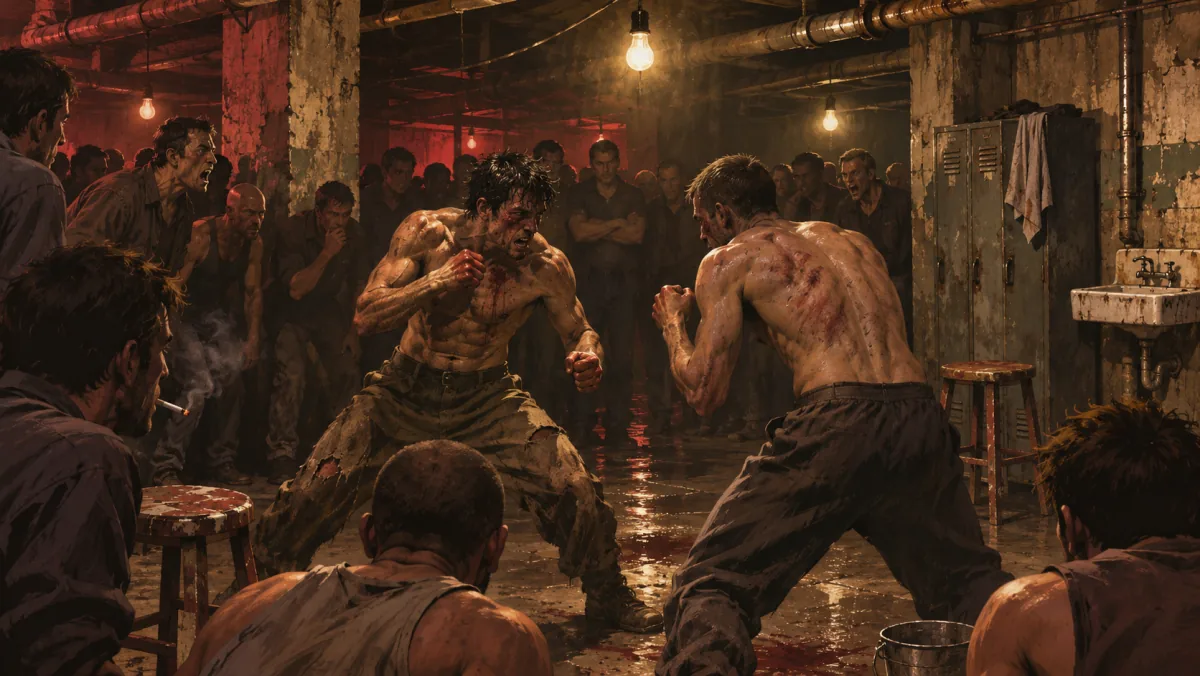
Tyler and the Narrator’s first fight is awkward, and one blow really did land. Norton has recalled actually hitting Pitt’s ear during filming.
Norton tells the story in this short interview from The Tonight Show Starring Jimmy Fallon:
Edward Norton on Fight Club’s Real Punch
Pitt and Norton’s preparation also included time with an expert soap maker. An oddly domestic skill for this film, perhaps, but Tyler does have a business to run.
For a fan gift, the pink soap bar below brings that connection into something you can actually use. It comes packaged and has no added fragrance.

- Enjoy the film reference in a soap bar you can actually use.
- Wash without added fragrance if you prefer unscented products.
- Give a vegan-friendly movie gift that comes already packaged.
Making the Chaos Look and Sound Real
Lou’s basement needed light without looking polished. The crew used cheap aluminum clamp-on work lamps from Home Depot, which the art department aged to fit the room.
Overhead lights created a rough ring in the middle, while dimmer light let the crowd recede around it. The fixtures helped tell you what kind of place this was: somewhere people had made do with what they could find.
The sound team got useful material from the built house itself. They walked through its rooms and recorded footsteps and creaking floors. That kept the set’s own creaks and footsteps in the finished film.
The fights posed another problem. Added electronic echo was not giving the team the basement sound they wanted. So they played the recorded effects through a speaker in a basement at Skywalker Sound, then recorded them again with the room’s natural echo. Sometimes you need an actual basement.
The film’s opening used a very different kind of construction. Digital Domain created the journey through a brain as one continuous computer-generated shot. What feels like a camera moving through a tiny physical world was built with digital animation.
The Music Behind the Mayhem
The Dust Brothers, Mike Simpson and John King, wrote the score: the music created specifically for the film. It was their first feature-film score. They worked in separate rooms, with Fincher moving between them to hear what they’d made.
Pixies’ “Where Is My Mind?” also appears in Fight Club. That existing song came from the band’s 1988 album Surfer Rosa, years before the film’s release.
Here’s the band’s official lyric video for the song:
Pixies: Where Is My Mind?
Ready to see which details stuck? Try the Fight Club quiz.
Fight Club Quiz: Talk About Your Score
Pulp Fiction: How the Pieces Came Together
The Matrix Unplugged: How the Movie Came to Life