
Pulp Fiction: How the Pieces Came Together
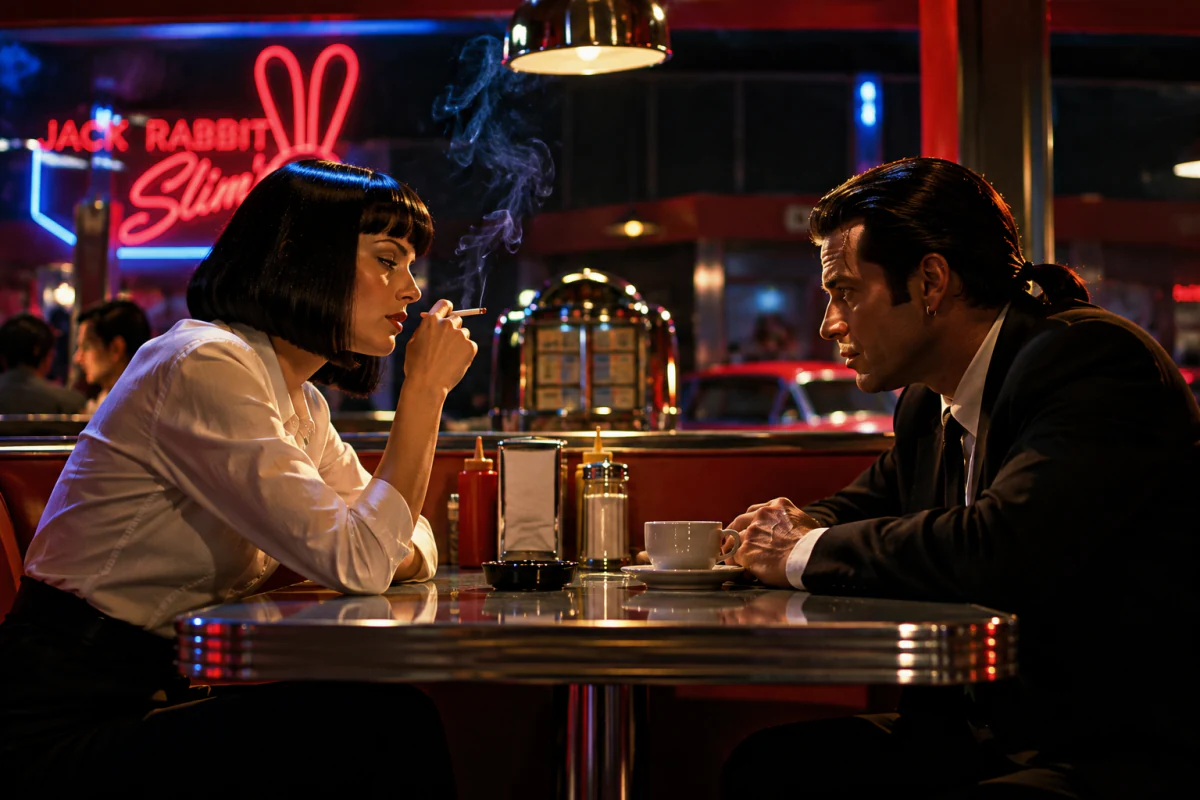
A night out, a boxing match, and a diner robbery all get tangled up in Pulp Fiction. John Travolta and Samuel L. Jackson play Vincent Vega and Jules Winnfield, two Los Angeles hit men in the 1994 crime film. Their paths cross with people whose troubles have already started, even if the movie hasn't shown us how.
Behind the scenes, the people making the movie had their own problems to solve: an actor booked for another film, trousers that wouldn't fit, and a dance with room for a few extra moves.
Spoilers ahead for the 1994 film.
The Film at a Glance: Filmed September 20–November 30, 1993; US theatrical release October 14, 1994.
How the Stories Fit Together
Vincent and Jules work for crime boss Marsellus Wallace. His wife, Mia, spends an evening out with Vincent. Boxer Butch Coolidge has a different arrangement with Marsellus: he's been paid to lose a fight.
Quentin Tarantino directed the film and wrote its script. The stories are credited to him and fellow writer Roger Avary. Tarantino lets events run out of order, so a later scene can change how you understand an earlier one.
The opening finds Pumpkin and Honey Bunny, a couple planning to rob a diner. The film returns to that diner at the end, after other characters' stories have led them into the same room.
The People Behind the Characters
Vincent could have had a different face. Tarantino approached Michael Madsen, an actor from his earlier film Reservoir Dogs, about the role. Madsen had already signed for the western Wyatt Earp.
He later recalled trying to fit both films into his schedule. The Wyatt Earp director wouldn't release him from two weeks of rehearsals. Travolta took the part.
Here are eight of the actors behind the film's connected lives. The filming-age comparison uses September 1993; the final column uses October 31, 2026.
| Performer | Character | Birth Date | Age in September 1993 | Age on Oct. 31, 2026 |
|---|---|---|---|---|
| John Travolta | Vincent Vega | February 18, 1954 | 39 | 72 |
| Samuel L. Jackson | Jules Winnfield | December 21, 1948 | 44 | 77 |
| Uma Thurman | Mia Wallace | April 29, 1970 | 23 | 56 |
| Bruce Willis | Butch Coolidge | March 19, 1955 | 38 | 71 |
| Ving Rhames | Marsellus Wallace | May 12, 1959 | 34 | 67 |
| Tim Roth | Pumpkin | May 14, 1961 | 32 | 65 |
| Amanda Plummer | Honey Bunny | March 23, 1957 | 36 | 69 |
| Harvey Keitel | The Wolf | May 13, 1939 | 54 | 87 |
Producer Lawrence Bender recalled a $140,000 fee for Travolta—about $320,000 in September 2026 dollars. Bender also described profit shares for the principal cast, so that reported fee doesn't establish Travolta's final earnings.
The inflation estimate uses US consumer-price figures for the film's 1994 release year and September 2026.
The Real Places and the Made-Up Diner
The film's two restaurants came together in different ways. The robbery diner was a real restaurant. Jack Rabbit Slim's, where Vincent takes Mia dancing, combined two sites.
Its dining room and dance floor were built in a Culver City warehouse. The outside came from a former bowling alley in Glendale.
| Scene | Filming Site and Address | Filming Notes |
|---|---|---|
| Robbery diner | Hawthorne Grill, 13763 South Hawthorne Boulevard, Hawthorne, California, United States | Restaurant; later demolished |
| Jack Rabbit Slim's | 1435 Flower Street, Glendale, California, United States | Former bowling alley; exterior only |
| Home of Lance, Vincent's drug supplier | 3519 La Clede Avenue, Atwater Village, Los Angeles, California, United States | House |
| Butch's boxing venue | Raymond Theatre, 129 North Raymond Avenue, Pasadena, California, United States | Frontage retained; interior later converted |
| Pawnshop | Crown Pawn Shop, 20933 Roscoe Boulevard, Canoga Park, Los Angeles, California, United States | Exterior |
The final diner confrontation also gives Jules's lettered wallet its moment. The movie-inspired wallet below works as an everyday wallet or a finishing touch for a Jules costume.

- Use a movie collectible as your everyday wallet.
- Enjoy the feel of real leather and raised embroidery in your daily carry.
- Finish a Jules costume with the included novelty insert.
From Sharp Suits to the Dance Floor
Betsy Heimann, the costume designer, gave the two hit men different looks within their matching black-suit style. Vincent's linen suit could wrinkle and look untidy. Jules's close-fitting collar suggested a preacher.
Mia's clothes grew out of a practical problem. Heimann couldn't find trousers long enough for Uma Thurman within the budget, so she made them deliberately short. The production also made Mia's white shirt.
You can see that outfit on the dance floor in this Miramax clip.
The dance itself had room for Travolta's ideas. He later recalled that Tarantino first wanted the twist. Travolta suggested adding the swim, Batman, and hitchhiker, and the director agreed.
Tarantino talks about the scene in this short BBC interview.
When the partners change out of their suits, Vincent ends up in a UC Santa Cruz Banana Slugs T-shirt. Heimann arranged permission and had the shirt sent to the production. It's quite a change from his rumpled suit.
The Banana Slugs tee below lets you borrow Vincent's casual look for a costume or a relaxed weekend.

- Build a simple Pulp Fiction-inspired outfit around an everyday shirt.
- Enjoy soft cotton for errands, study sessions or laid-back weekends.
- Keep care straightforward with a machine-washable tee.
The Music and the Movie's Arrival
Tarantino chose recordings instead of having a new musical score written. Getting those songs into the movie took more than putting on a record.
Music supervisor Karyn Rachtman handled the practical side: checking costs and getting permission to use the music. Tarantino sometimes offered alternatives, though Chuck Berry's “You Never Can Tell” and Urge Overkill's “Girl, You'll Be a Woman Soon” were songs he insisted on having.
Then there's the guitar over the opening credits. Dick Dale and His Del-Tones' “Misirlou,” also spelled “Miserlou,” sets the film in motion. Tarantino had considered “Surf Rider” before settling on it. Listen to the Dick Dale recording below.
Months before its US theatrical release, Pulp Fiction won the Palme d'Or, the Cannes Film Festival's top prize, in May 1994.
The script brought another award the following year: the 1995 Oscar for original screenplay, with Tarantino and Avary named as winners.
Take another turn through the story with our Pulp Fiction quiz.
Pulp Fiction: Fifteen Questions, No Particular Order
Behind the Walls of The Shawshank Redemption
Inception: The Real Work Behind the Dream